By PYMNTS
July 17, 2026
Regions Financial Corp. (NYSE: RF) has signaled a period of significant operational momentum, reporting a surge in digital engagement and a series of strategic technological milestones during its second-quarter earnings call on Friday, July 17, 2026. As the financial services landscape continues to tilt heavily toward mobile-first interactions, the Birmingham-based regional banking giant is positioning itself at the forefront of the digital transformation race.
Under the leadership of President, CEO, and Chairman John M. Turner, Regions is leveraging a combination of proprietary mobile app enhancements and core infrastructure modernization to capture market share across its expansive footprint in the South, Midwest, and Texas.
Main Facts: A Digital-First Strategy
The central narrative emerging from Regions’ Q2 report is the successful migration of customer behavior toward digital channels. According to the data presented by management, the bank is no longer merely "offering" digital services; it is operating as a digital-first institution where physical branch infrastructure acts as a complementary touchpoint to a robust online ecosystem.
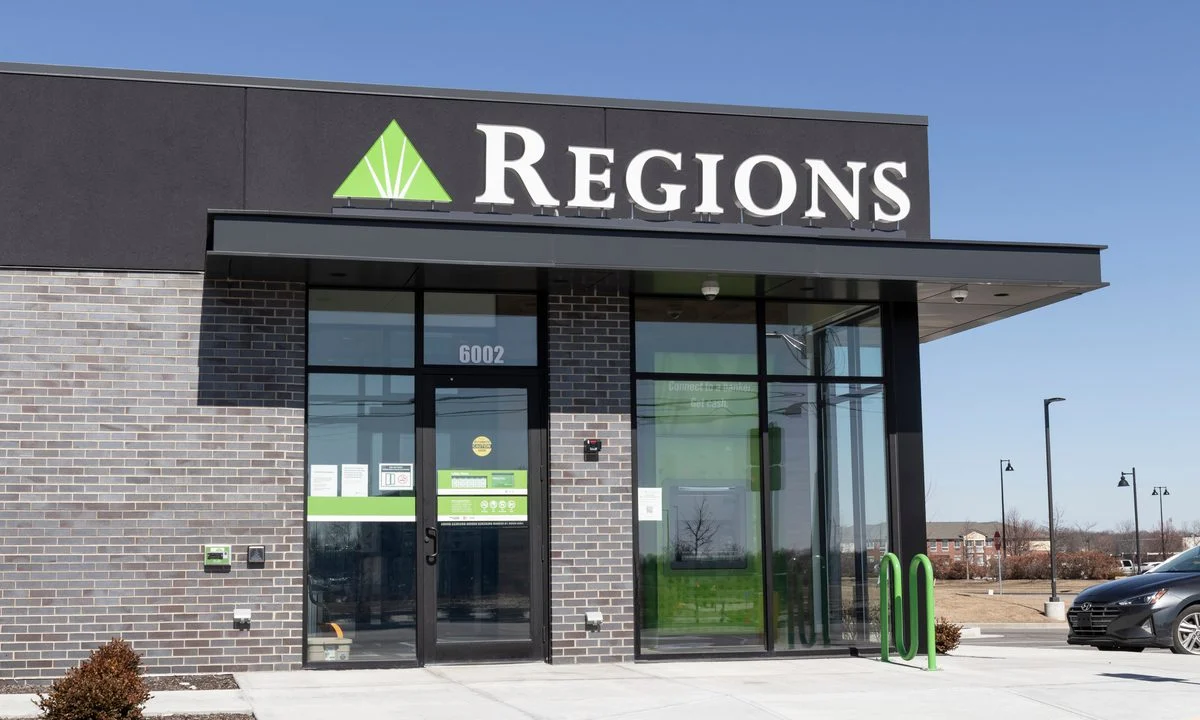
Regions currently operates 1,200 banking offices and 1,750 ATMs. However, the bank’s internal metrics suggest that the traditional brick-and-mortar footprint is increasingly supported by a digital infrastructure that handles the vast majority of routine customer transactions. The bank’s commitment to its digital transformation was underscored by Turner, who labeled these initiatives as "central to our long-term strategy."
Chronology of Progress: From Infrastructure to Acquisition
The second quarter of 2026 was marked by a distinct focus on both internal efficiency and external growth:
- April–June 2026: The bank focused heavily on the rollout and optimization of its new native mobile application. Internal data indicates that user interface updates and feature integrations have led to significant spikes in engagement.
- July 2, 2026: In a major strategic move to bolster its capital markets division, Regions announced the acquisition of The Frazer Lanier Company, a Montgomery-based investment banking firm specializing in municipal and corporate securities.
- July 17, 2026: During the Q2 earnings call, management confirmed the successful implementation of a new commercial lending platform, a milestone in the company’s broader multi-year modernization project.
- Future Outlook (Late 2026–2027): The bank is currently transitioning toward a core deposit transformation, with a pilot phase scheduled for later this year and a full-scale conversion targeted for 2027.
Supporting Data: The Quantitative Shift
The numbers presented in the Q2 investor presentation paint a clear picture of a bank in the midst of a digital evolution. The following metrics illustrate the pace of this shift:
Digital Engagement Metrics
- Transaction Mix: The share of customer transactions conducted digitally has climbed from 75% to 80% over the last two years, reflecting a decisive shift in how Regions’ clients interact with their finances.
- Mobile Banking Adoption: Active mobile banking users have grown by 6%, reaching a total of 2.73 million.
- Login Frequency: Mobile banking logins surged 19% to 211 million over the past 24 months, indicating higher user stickiness.
- Peer-to-Peer Growth: Usage of Zelle, the popular P2P payment network, has increased by 44% compared to two years ago.
- Customer Support Evolution: Customer chat volume leaped by 70% year-over-year, suggesting that clients are increasingly preferring asynchronous, digital communication over phone calls or in-branch visits for support.
Operational Benchmarking
According to independent surveys cited by CEO John M. Turner, Regions currently holds the No. 1 spot among regional banks for online banking satisfaction, as well as the No. 1 spot for mobile app quality. These rankings serve as a critical validation for the capital expenditure Regions has directed toward its technology stack over the past several quarters.
Official Responses: Management’s Vision
During the earnings call, John M. Turner articulated the bank’s philosophy regarding its technological investments.
"These results reflect the work we’ve done to enhance the client experience, deliver more intuitive digital capabilities, and make banking easier for our customers," Turner stated. He emphasized that the modernization efforts were not just about "checking a box" for digital presence, but about fundamentally improving the speed and agility of the institution.
Regarding the new commercial lending platform, Turner noted, "This represents a significant step forward in enhancing our technology infrastructure, improving speed to market, and elevating the experience we deliver to our clients and bankers."
On the acquisition of The Frazer Lanier Company, Turner expressed optimism: "We believe this transaction expands our capital markets platform, enhances our municipal finance expertise, and allows us to broaden the solutions we provide to the public sector and institutional clients."
Implications for the Operating Environment
Beyond its internal metrics, Regions provided a macro-level assessment of the economic climate. Despite the persistent narrative of economic uncertainty, Turner offered a relatively optimistic outlook for the markets in which the bank operates.
Economic Sentiment
Turner described the current operating environment as "encouraging," noting that businesses remain well-positioned. He highlighted two key pillars of stability:
- Investment and Job Growth: Despite global headwinds, Regions continues to observe steady levels of corporate investment and job creation within its geographic footprint.
- Consumer Resilience: On the consumer side, spending trends remain healthy. Turner pointed out that customers are maintaining "solid account balances and liquidity buffers," suggesting that the typical Regions customer is well-equipped to navigate the current financial climate.
Strategic Implications
The combination of technological modernization and targeted acquisitions suggests that Regions is pursuing a dual-track strategy.
First, the bank is working to optimize its retail and commercial banking experience through digital automation. By moving toward a full core deposit transformation by 2027, the bank aims to reduce legacy operational costs and improve the responsiveness of its internal systems.
Second, the acquisition of Frazer Lanier demonstrates that the bank is not ignoring the "high-touch" segment of its business. By integrating specialized investment banking expertise, Regions is attempting to cross-sell a broader suite of services to its institutional and public-sector clients, essentially creating a "one-stop-shop" model that balances digital convenience for the mass market with specialized advisory services for high-value clients.
Conclusion
Regions Financial Corp. enters the second half of 2026 with a clear sense of direction. By focusing on digital adoption as a primary KPI and coupling it with strategic growth in capital markets, the bank is attempting to insulate itself from the volatility that often characterizes the regional banking sector.
As the industry moves toward 2027, all eyes will be on the bank’s core deposit transformation project. If the execution matches the current pace of their mobile app improvements and commercial platform rollouts, Regions appears well-positioned to maintain its status as a top-tier regional player in an increasingly competitive, digitally driven banking world.