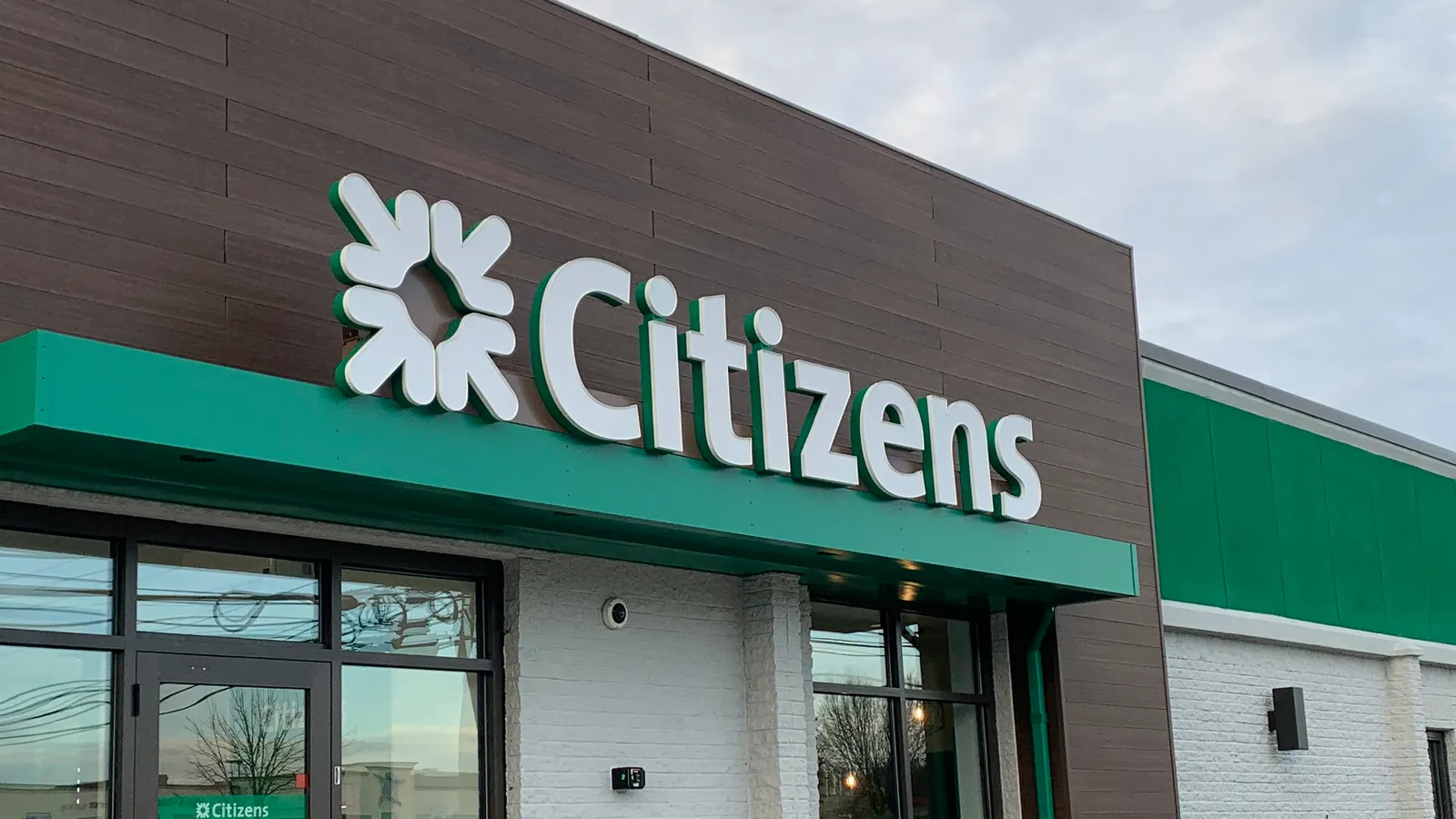
In a definitive move to modernize its retail footprint and sharpen its competitive edge, Citizens Financial Group (Citizens) announced on Thursday a comprehensive transformation of its physical branch network. As outlined in the bank’s second-quarter earnings presentation, the strategy involves a significant pivot away from supermarket-based banking in favor of a leaner, high-impact model of stand-alone branches.
This restructuring plan will see the closure of 100 to 120 locations currently situated within supermarkets. In their place, Citizens intends to launch 50 to 60 new stand-alone branches strategically positioned in key markets. This shift is not merely a change in geography; it is a fundamental redesign of the bank’s service philosophy, transitioning from transactional convenience toward a high-touch model focused on private banking, wealth management, and robust support for small business clients.
The Strategy: Quality Over Quantity
The decision reflects a broader industry trend where major financial institutions are re-evaluating the role of the brick-and-mortar branch in an increasingly digital world. For Citizens, the goal is to optimize the deposit trajectory without the excessive capital expenditure associated with "de novo" (newly created) branch expansion into unfamiliar territories.
“This type of careful investment in physical locations and in people, if executed well, should create a nice lift in the deposit trajectory without taking on the risk and significant capital expenditure of opening a whole bunch of de novos outside of the footprint,” said Citizens CEO Bruce Van Saun during a conference call with analysts on Thursday.
By shrinking the physical size of its branches—moving from legacy footprints of approximately 7,000 square feet to streamlined 2,000 to 3,000-square-foot locations—the bank aims to reduce overhead while creating environments better suited for meaningful, consultative client interactions.
A Chronology of Transformation
The path to this strategic pivot has been characterized by consistent internal messaging and a steady evolution of the bank’s retail identity.
- March 2025: Citizens President Brendan Coughlin highlighted the necessity of "performing surgery" on legacy markets, particularly within New England. He emphasized that the bank needed to curate its physical presence to appeal to mass-affluent customers, ensuring branches were placed on the "right corners" with top-tier staffing.
- April 2025: Nuno Dos Santos, the bank’s head of branch distribution, articulated the firm’s "aggressive" stance on reinvesting in its existing assets, signaling that the status quo was no longer sufficient.
- May 2025: Matt Boss, head of the consumer bank, reiterated that the 14 states currently occupied by Citizens provide ample room for growth, effectively silencing speculation that the bank might seek to expand its geographic footprint through acquisition—a path chosen by rivals like Huntington and Fifth Third.
- July 2025 (Present): The formal announcement of the supermarket-to-stand-alone transition marks the operational execution of these long-standing strategic pillars.
Comparative Market Analysis: Where Citizens Stands
Citizens’ decision to deepen its presence in its current 14-state footprint contrasts sharply with the expansionist policies of its peers. While regional powerhouses such as Huntington and Fifth Third have pursued growth through the acquisition of Texas-headquartered lenders, Citizens has opted for an internal transformation.
This approach is increasingly common among banks seeking to capture the "mass-affluent" segment—customers who possess enough wealth to require personalized financial advice but who do not necessarily qualify for traditional ultra-high-net-worth private banking services. Both Truist and Regions have embarked on similar initiatives, upgrading their physical presence and upskilling their staff to cater to these specific demographics.
The move to shutter in-store branches is also a well-worn path in the banking sector. The grocery-store branch model, once heralded as the pinnacle of convenience, has fallen out of favor as digital adoption renders basic transactional banking—like check cashing or simple deposits—possible from a smartphone. Huntington, for instance, closed nearly 100 Meijer-based branches following its acquisition of TCF in 2021. Similarly, the industry saw a wave of closures from institutions like People’s United, U.S. Bank, and PNC, all of whom recognized that the maintenance costs of in-store locations often outweighed the deposit growth they generated.
Financial Implications and Performance Data
The bank’s confidence in this restructuring is backed by a strong fiscal performance. In its second-quarter earnings statement, Citizens reported a 35% year-over-year increase in profit, totaling $587 million. Revenue followed a similar upward trajectory, climbing 12% to $2.3 billion.
These results are central to the bank’s medium-term financial targets. Citizens has publicly committed to achieving a 16% to 18% return on tangible common equity (ROTCE) by the end of 2027. Currently, the bank is making steady progress, reporting a 13.9% ROTCE for the second quarter, a notable improvement from the 12.2% reported just three months prior. Management maintains that the retooling of the branch network will not hinder these targets; rather, it is viewed as an essential engine for reaching them.
The Human Element: Redefining the Banker’s Role
A crucial component of this transition is the evolution of the "banker." In the new, smaller branch footprints, the focus shifts away from the teller window. Instead, the floor plan is designed to facilitate private, quiet conversations between bankers and clients.
This emphasis on "advice-led" banking is intended to solidify loyalty among mass-affluent and small business clients. By reducing the number of locations, Citizens is betting that it can concentrate its best human capital in the locations that matter most. The bank is essentially trading the breadth of its reach for the depth of its relationships.
Strategic Risks and Future Outlook
While the strategy is sound on paper, it is not without risks. Shuttering over 100 locations could alienate customers who value the hyper-convenience of in-store banking. Furthermore, the success of the new stand-alone branches depends heavily on the bank’s ability to attract and retain specialized staff capable of handling complex wealth management and small business inquiries.
However, the consensus among analysts is that the bank’s focus on its existing 14-state footprint is a prudent move in a high-interest-rate environment where capital preservation is paramount. By avoiding the risks associated with rapid, large-scale acquisitions, Citizens is betting on organic growth fueled by a better, rather than bigger, branch network.
As the financial services industry continues to grapple with the digital-physical divide, Citizens’ strategy serves as a blueprint for the modern regional bank: optimize the footprint, prioritize the mass-affluent, and leverage technology to handle transactions while leveraging people to handle relationships. With profit margins expanding and a clear roadmap for 2027, the bank appears poised to navigate this transition from a position of strength.
The coming quarters will be critical as the bank begins the physical closures and the construction of its new hubs. For now, the leadership team remains steadfast: the future of banking isn’t just about where the branch is located, but what happens once the customer walks through the door.