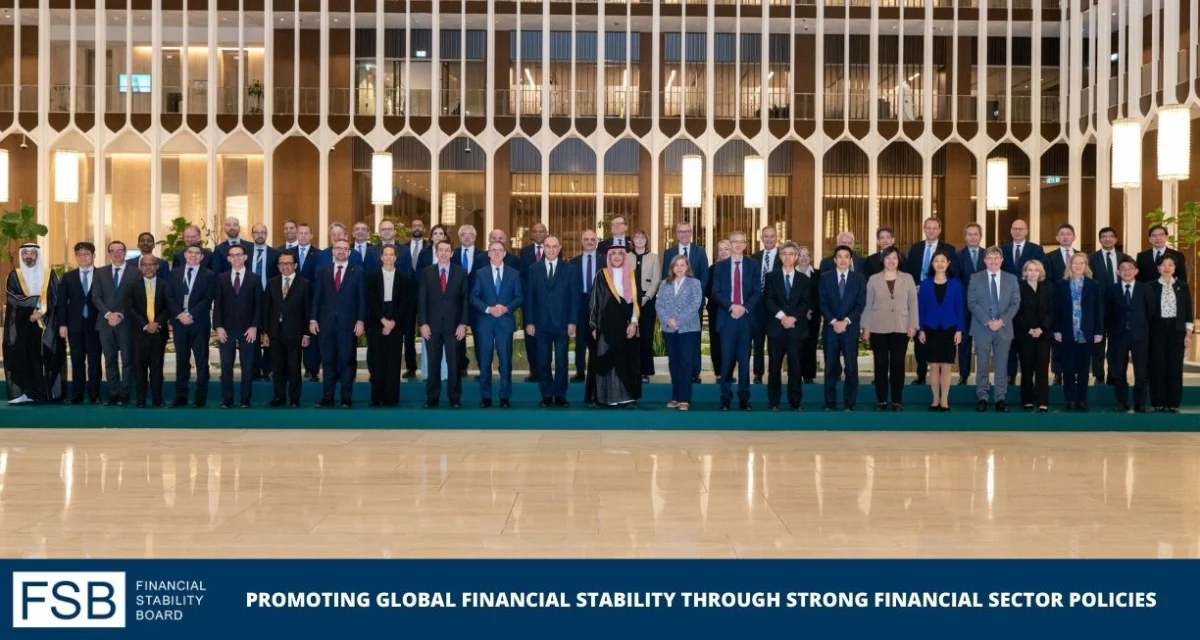
PORT LOUIS, MAURITIUS – July 17, 2026 – Amidst a global landscape characterized by fluctuating interest rates, shifting geopolitical alliances, and the rapid digitization of financial services, the Financial Stability Board (FSB) Regional Consultative Group for Sub-Saharan Africa (RCG SSA) concluded a high-stakes two-day summit in Mauritius. Hosted by the Bank of Mauritius, the meeting served as a critical nexus for central bank governors and senior financial regulators to align on strategies to fortify the continent’s financial architecture against systemic risks.
The summit, held on July 16–17, 2026, underscored the necessity of a coordinated regional approach to financial stability. Under the joint leadership of Lesetja Kganyago, Governor of the South African Reserve Bank, and Denny Kalyalya, Governor of the Bank of Zambia, the delegation engaged in rigorous deliberations aimed at harmonizing regulatory standards and bolstering the resilience of African markets in an era of unprecedented volatility.
Main Facts: A Strategic Gathering of Financial Leaders
The RCG SSA serves as a vital bridge between the global mandate of the Financial Stability Board and the specific, often nuanced, needs of the Sub-Saharan African financial landscape. The Mauritius summit was designed to facilitate a frank exchange of perspectives on the FSB’s 2026 work program, ensuring that the voice of emerging African economies is not only heard but integrated into international financial policy.
Key focus areas of the summit included:
- Cross-Border Payment Systems: Exploring mechanisms to reduce the cost and friction of remittances and intra-African trade.
- Climate-Related Financial Risks: Assessing how environmental mandates are reshaping lending portfolios and the necessity for green finance frameworks.
- Digital Asset Regulation: Developing a unified stance on the oversight of decentralized finance (DeFi) and the proliferation of Central Bank Digital Currencies (CBDCs).
- Debt Sustainability: Evaluating the impact of external debt burdens on domestic financial stability and the role of monetary policy in mitigating sovereign risk.
The presence of the Bank of Mauritius as host highlighted the nation’s role as a burgeoning international financial center, providing a stable backdrop for what proved to be a substantive dialogue on regional integration.
Chronology of the Summit: A Two-Day Deep Dive
Day One: Assessing the Macro-Financial Landscape
The proceedings commenced on the morning of July 16 with an opening address emphasizing the precariousness of current global economic conditions. The morning session focused on the "State of the Region," where central bank governors provided country-specific updates on inflationary pressures and currency stability.
The afternoon session pivoted to the FSB’s global policy agenda. Attendees reviewed the progress of the FSB’s work on non-bank financial intermediation (NBFI) and its implications for African markets, where shadow banking—though less pervasive than in developed economies—is rapidly evolving.
Day Two: Implementation and Future-Proofing
The second day, July 17, was dedicated to technical workshops. Participants dissected the practical challenges of implementing the FSB’s "Policy Recommendations for Crypto-Asset Activities." Given the high adoption rates of mobile money and digital assets in Sub-Saharan Africa, this session was arguably the most contentious and vital.
The summit concluded with a closed-door session involving the RCG SSA co-chairs, where a consensus was reached on the regional contributions to the FSB’s upcoming plenary. The group solidified their commitment to periodic reporting, ensuring that the insights gained in Mauritius are translated into actionable policy frameworks across the continent.
Supporting Data: The Economic Context of 2026
To understand the urgency of the RCG SSA discussions, one must look at the data characterizing the African economic environment in mid-2026.
The Inflationary Burden
Following the inflationary surges of the early 2020s, Sub-Saharan Africa has seen a stabilization in consumer price indices, yet core inflation remains sticky in several key economies. According to data presented during the summit, the regional average inflation rate hovered at approximately 8.4% in Q2 2026, significantly higher than the global target, forcing central banks to maintain "higher-for-longer" interest rate environments.
The Digital Transformation Gap
Data from the session on digital assets revealed that mobile money penetration in Sub-Saharan Africa reached an all-time high of 62% of the adult population by June 2026. However, the regulatory lag in supervising these platforms poses a systemic risk. The FSB’s analysis suggested that without unified regional standards, the risk of "regulatory arbitrage"—where financial institutions shift activities to countries with weaker oversight—could destabilize the regional financial fabric.
Debt and Liquidity
The discussions on sovereign debt were bolstered by figures showing that the median debt-to-GDP ratio for the region stood at 58% in 2026. The RCG SSA emphasized that while this is manageable for some, the high cost of debt servicing is crowding out essential investments in infrastructure and climate adaptation, effectively capping the region’s growth potential.
Official Responses and Strategic Directives
Governor Lesetja Kganyago of the South African Reserve Bank emphasized that the region’s stability is inextricably linked to global cooperation. "We cannot afford to be silos," Kganyago remarked during the closing press briefing. "The challenges of 2026—whether it be the rapid evolution of fintech or the lingering shadows of global supply chain disruptions—require that we speak with one, coherent regulatory voice."
Dr. Denny Kalyalya, Governor of the Bank of Zambia, echoed these sentiments, focusing on the need for institutional capacity building. "Our mandate is to ensure that as our markets become more sophisticated, our regulatory bodies become even more so," Kalyalya stated. "The Mauritius summit has provided us with a roadmap to enhance our supervisory frameworks, ensuring that financial innovation supports economic growth rather than threatening financial stability."
The Bank of Mauritius, acting as the gracious host, underscored the importance of regional hubs. "Mauritius is committed to serving as a gateway for financial stability in Africa," noted the Bank’s Governor. "By fostering these dialogues, we are not just discussing policy; we are building the trust necessary for cross-border financial integration."
Implications: A New Era of Financial Governance
The conclusions reached in Mauritius have significant implications for the future of the African financial sector.
1. Toward a Unified Regulatory Taxonomy
The most profound outcome of the meeting was the move toward a harmonized regulatory taxonomy for digital assets. By adopting the FSB’s global standards, member states are signaling to international investors that the African financial landscape is maturing, thereby potentially reducing the "risk premium" associated with investing in the region.
2. Heightened Focus on Climate Resilience
The RCG SSA has formally integrated climate risk stress testing into its agenda. This means that central banks across the region will likely begin requiring commercial banks to disclose their exposure to climate-related assets. This is a seismic shift that will force the banking sector to re-evaluate its lending practices, likely shifting capital toward sustainable energy and climate-resilient infrastructure.
3. Strengthening Non-Bank Supervision
As mobile money providers and fintech firms become increasingly systemically important, the summit’s emphasis on NBFI (Non-Bank Financial Intermediation) signals that these entities will soon face stricter capital and liquidity requirements. This move is designed to protect consumers and ensure that digital financial inclusion does not come at the cost of systemic instability.
4. A Stronger Global Voice
By aligning their work priorities with the FSB, the RCG SSA has effectively strengthened its leverage in global economic forums. As the international community debates the reform of the global financial architecture—including discussions on the IMF’s Special Drawing Rights (SDRs) and debt relief mechanisms—the consensus reached in Mauritius ensures that African nations can present a unified front.
Conclusion: Looking Ahead
The July 2026 meeting in Mauritius was more than a technical gathering; it was a demonstration of institutional resilience. As the global economy continues to navigate a path between recovery and stagnation, the Sub-Saharan African financial community has signaled its intent to be an active, informed, and stable participant in the global order.
The work initiated in Mauritius will continue throughout the remainder of 2026, with technical committees tasked with drafting the implementation guidelines for the policies discussed. For the financial professionals, investors, and citizens of the region, the message from the RCG SSA is clear: the architecture of African finance is being reinforced, not just to withstand the storms of today, but to enable the growth of tomorrow.