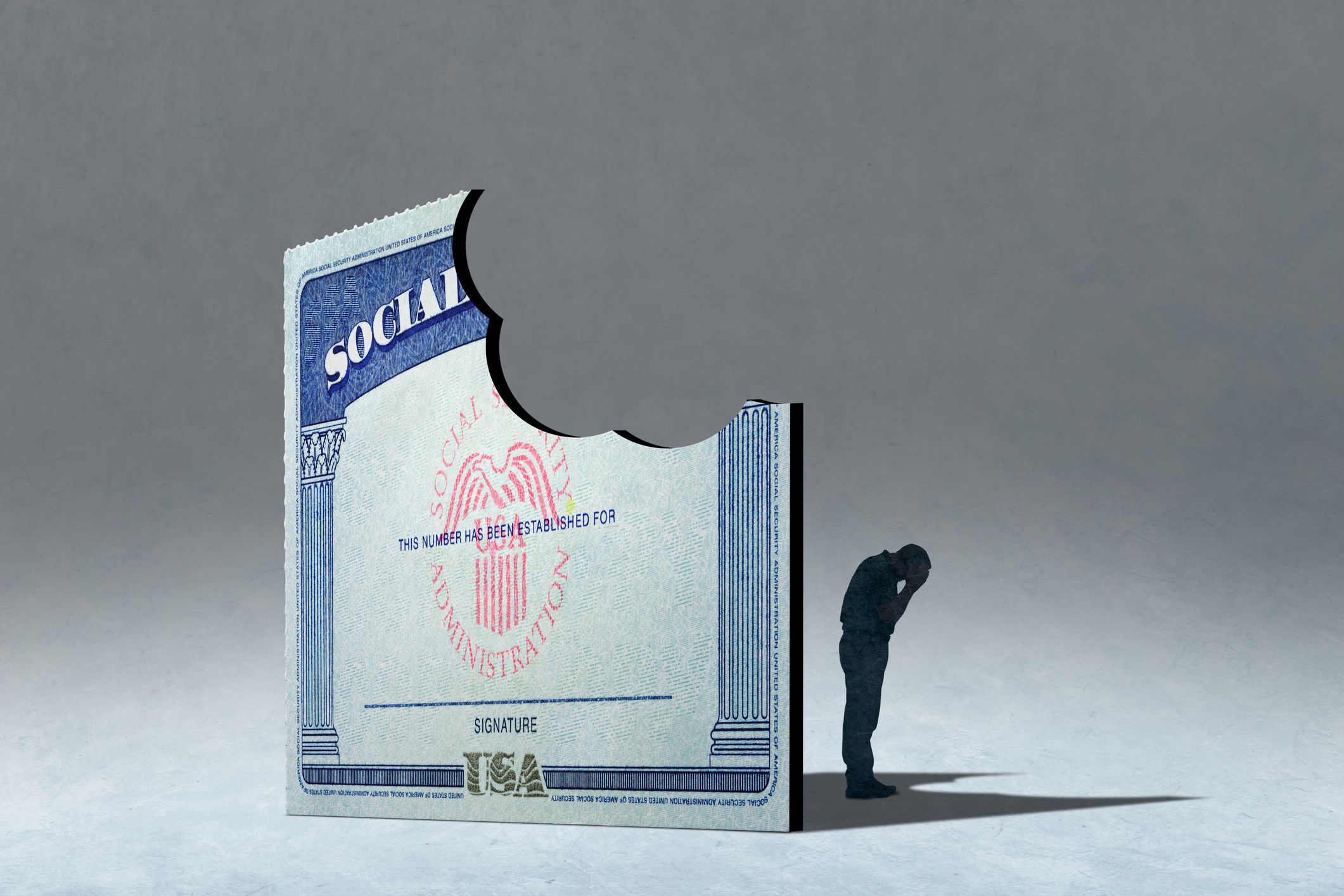
In a sunlit office in London, Adrian Cachinero, co-founder of Steakhouse Financial, looks at a photo of his 18-month-old daughter and makes a startling prediction: she may never need to sign a signature card or step foot inside a physical bank. To many, the bank account is the fundamental unit of adulthood—a rite of passage involving credit checks, minimum balances, and monthly statements. But for the generation born into a world of ubiquitous high-speed internet and blockchain protocols, the traditional bank account is increasingly viewed as a legacy technology, as outdated as a rotary phone or a paper map.
“My daughter might never need to open a bank account in her life,” Cachinero stated in a recent interview. “We’re building products for that generation.” This sentiment is not merely provocative rhetoric; it is the foundational thesis of a multi-billion-dollar shift in the global financial architecture. As decentralized finance (DeFi), stablecoins, and tokenized assets mature, the "bank" as an institution is being deconstructed into a series of digital protocols that live on the user’s smartphone, bypassing the intermediaries that have defined commerce for centuries.
Main Facts: The Deconstruction of Traditional Banking
The core of the argument presented by crypto executives and fintech innovators is that the traditional account-based model is being replaced by a wallet-based model. In the legacy system, a bank "holds" your money and records your balance on a private ledger. In the emerging digital-native system, the user holds their own assets in a cryptographic wallet, and the ledger is a public, transparent blockchain.
The Rise of the Self-Sovereign User
Steakhouse Financial, Cachinero’s firm, currently manages over $4 billion in blockchain-based vaults. These vaults are essentially smart contracts that allow users to deposit stablecoins (cryptocurrencies pegged to the US dollar or other fiat currencies) to earn yield. Unlike a savings account at a commercial bank, where the bank lends out your money and keeps the majority of the profit, these vaults allow users to retain direct control of their assets.
The Digital-First Expectation
For digital natives—Gen Z and the emerging Gen Alpha—the expectation is that financial services should be as frictionless as sending a WhatsApp message or streaming a video on TikTok. The delay of "business days," the opacity of cross-border wire transfers, and the physical constraints of banking hours are increasingly intolerable to a generation that has never known a world without the internet.
The Blurring of Industry Lines
We are witnessing a "great convergence." Traditional banks are adding crypto trading and custody services, while crypto exchanges like Binance are offering debit cards and interest-bearing products. This overlap suggests that while the functions of banking (saving, lending, payments) will remain, the identity of the provider is up for grabs.
Chronology: From Bitcoin to the "Super App" Era
To understand why executives are making these claims in 2024, one must look at the compressed timeline of financial evolution over the last fifteen years.
- 2009–2014: The Proof of Concept. The launch of Bitcoin introduced the idea of "peer-to-peer electronic cash" without a central authority. Initially dismissed as a niche interest for cypherpunks, it proved that value could be moved globally without a bank.
- 2015–2019: The Programmable Money Era. The launch of Ethereum allowed for "smart contracts," enabling complex financial transactions (like loans and insurance) to be automated. During this time, the first stablecoins appeared, solving the volatility problem that had plagued Bitcoin.
- 2020–2022: The DeFi Summer and Institutional Interest. Decentralized Finance (DeFi) protocols saw an explosion in total value locked (TVL). Simultaneously, traditional institutions like Visa and PayPal began integrating stablecoins into their networks, acknowledging that blockchain was a superior rails system for moving money.
- 2023–Present: The Integration Phase. The conversation has shifted from "crypto vs. banks" to "crypto inside the financial system." The emergence of "Super Apps" and tokenized real-world assets (RWAs) marks the current era, where the underlying technology becomes invisible to the end user.
Supporting Data: The Quantitative Shift
The theory that bank accounts are becoming obsolete is supported by a growing mountain of data regarding stablecoin usage and neobank adoption.
Stablecoins as the New Global Rails
According to Visa’s stablecoin tracker, the network recorded $6.6 billion in volume across 132.4 million retail-sized transactions (defined as transactions under $250) in a recent 30-day period. This suggests that stablecoins are not just being used by "whales" or institutional traders, but are increasingly being used for everyday commerce and remittances.
Standard Chartered has projected a massive expansion in this sector, expecting stablecoin circulation to grow sevenfold to approximately $2 trillion by 2028. Furthermore, the bank predicts that agent-led purchases—where digital assistants or AI agents handle transactions—could rise from 1% of e-commerce in 2025 to 12% by 2029.
The Neobank Surge
The traditional "Big Four" banks in various regions are facing stiff competition from digital-only neobanks. Current data shows that neobanks now capture nearly 40% of all new bank accounts globally, serving over 1.4 billion users. For a digital native, a neobank app is often the gateway to the broader crypto ecosystem, as these platforms frequently offer seamless on-ramps to stablecoins and digital assets.
Official Responses: Perspectives from the Front Lines
The transition toward a bankless future is viewed differently depending on where an executive sits in the financial ecosystem.
The Visionary View: Standard Chartered
Naveen Mallela, Global Head of Payments at Standard Chartered, believes the very definition of a "bank account" is morphing into a "unified wallet." Speaking in a personal capacity, Mallela suggests that the future involves a wallet tied to an individual’s digital identity.

"Rather than having bank accounts with individual banks or having separate brokerage accounts, you would have a wallet where you’ll have cash, tokenized deposits, stablecoins, and crypto—all in one app," Mallela explained. In this vision, banks don’t disappear; they become the infrastructure providers that issue the "tokenized deposits" held within the user’s wallet.
The Exchange View: Binance
Binance, the world’s largest cryptocurrency exchange, is already seeing this shift manifest in emerging markets. Shunyet Jan, Binance’s Head of Exchange and Trading, notes that their user base is skewing younger, particularly in regions where traditional banking infrastructure is weak or inaccessible.
"All of us are seeing the value of a super app where you could do everything together in one place," Jan said. He revealed that many Binance employees already live "bank-light" lives, keeping the majority of their assets on the exchange and using Binance-linked debit cards for daily expenses.
The Pragmatic View: AMINA Bank
However, not everyone agrees that the "bank" is dead. Rohan Misra, CEO of AMINA Bank ADGM, argues that while the interface might change, the regulated infrastructure remains essential. He raises a critical point regarding self-custody—the practice of holding one’s own private keys.
"Self-custody means if someone accesses your private key, your assets are gone with no recourse," Misra warned. "That’s cash under a mattress. The wallet alone isn’t the bank account; the regulated infrastructure around it is."
Implications: A New Financial World Order
The move toward a "bankless" or "bank-invisible" world carries profound implications for society, regulation, and the global economy.
1. Financial Inclusion in Emerging Markets
In many parts of the world, opening a bank account is a bureaucratic nightmare requiring a physical address and formal identification that many do not possess. Digital wallets and stablecoins provide a bypass, allowing the "unbanked" to participate in the global economy. This is particularly relevant in high-inflation environments where stablecoins offer a lifeline to a stable currency like the US dollar.
2. The Death of Latency
The "T+2" settlement cycle (taking two days to settle a trade) is a relic of the paper era. In a digital-native financial system, settlement is instantaneous. This increases the velocity of money, allowing capital to be redeployed immediately, which could provide a significant boost to global GDP.
3. The Regulatory Battleground
If the "bank" is just a piece of code on a smartphone, how do governments enforce Anti-Money Laundering (AML) and Know Your Customer (KYC) laws? The shift toward wallet-based finance is forcing regulators to rethink their approach, moving from regulating institutions to regulating protocols and on-ramps.
4. The Privacy Paradox
While blockchain offers transparency, it also raises concerns about financial privacy. In a traditional bank, only the bank and the government can see your transactions. On a public blockchain, transactions are visible to anyone with an internet connection. The development of privacy-preserving technologies (like Zero-Knowledge Proofs) will be the next major hurdle for digital-native finance.
Conclusion: Evolution, Not Extinction
As Adrian Cachinero observes, the internet is not a "tool" for the younger generation; it is a "fact of life." Just as the digital-native generation has largely abandoned physical mail for email and cable TV for streaming, they are likely to abandon the traditional, siloed bank account for integrated digital wallets.
The banks that survive will be those that realize they are no longer the "owners" of the customer’s money, but the "service providers" for the customer’s assets. The future of finance looks less like a marble-pillared building and more like a seamless, invisible layer of the internet—a world where a child born today may indeed grow to adulthood without ever needing to "open" a bank account, because their financial world was open from the moment they first touched a screen.