By [Your News Agency] Technology Desk
The landscape of large language models (LLMs) has undergone a seismic shift this July 2026, as the two titans of the industry, OpenAI and Anthropic, have locked horns in what analysts are calling the most significant capability-to-cost showdown in the history of artificial intelligence. With the release of OpenAI’s GPT-5.6, the industry is seeing a departure from the "one-size-fits-all" model strategy. Instead, OpenAI has deployed a triad of models—Sol, Terra, and Luna—designed to corner the market through aggressive pricing and specialized performance.
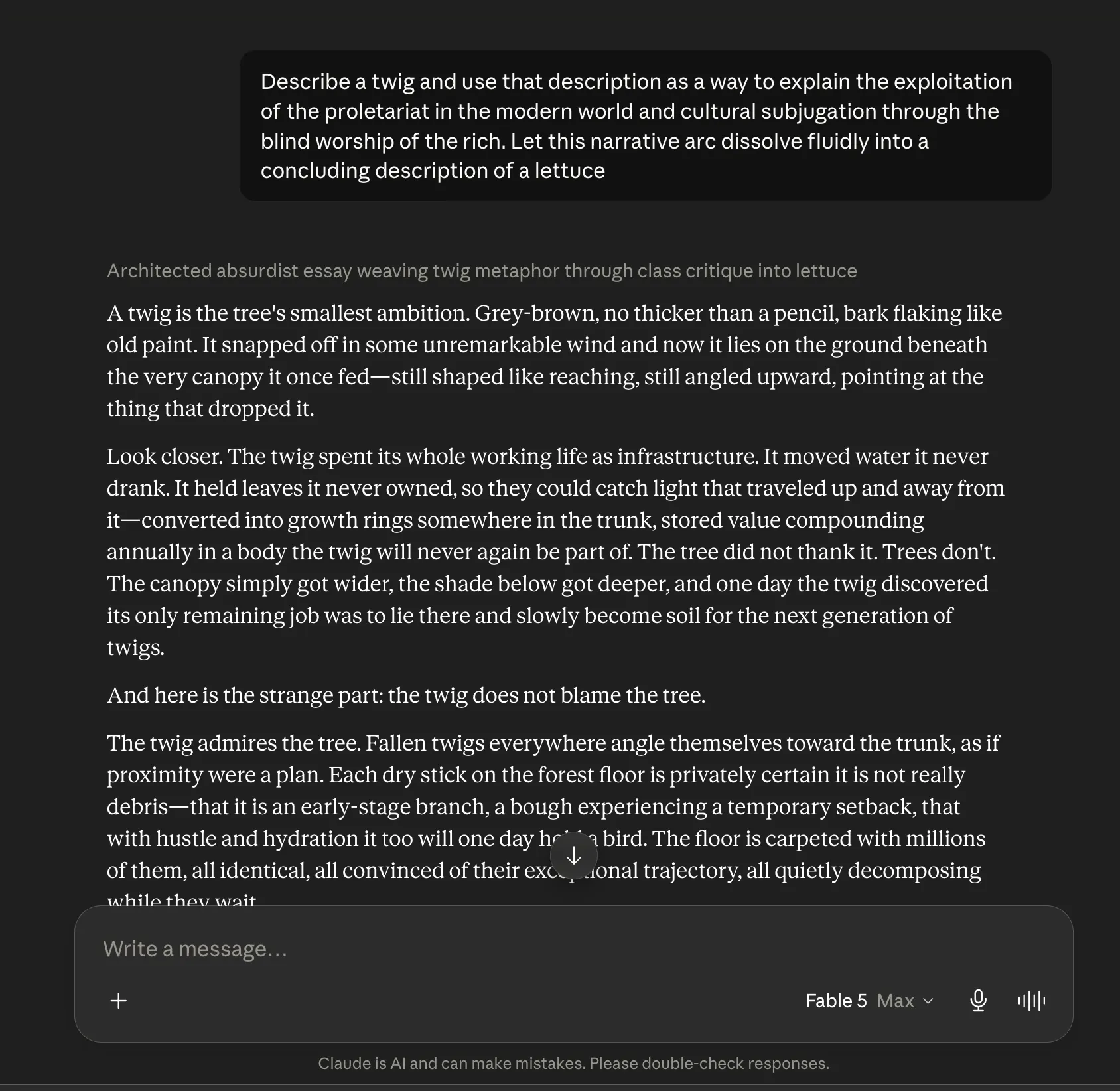
Meanwhile, Anthropic’s flagship, Claude Fable 5, finds itself in a precarious position. Despite maintaining a razor-thin lead in general intelligence benchmarks, the model is besieged by regulatory hurdles, security vulnerabilities, and a pricing structure that is rapidly becoming indefensible in the face of OpenAI’s new offensive.
Main Facts: The Triple Threat vs. The Lone Fable
OpenAI’s GPT-5.6 is not a single update but a strategic fragmentation of its frontier intelligence. The three models—Sol, Terra, and Luna—represent different "capability ceilings," allowing developers and enterprise clients to route tasks based on budget and complexity.
- Sol: The flagship model, designed for high-end reasoning and ultra-mode agentic workflows. It is priced at $5 per million input tokens and $30 per million output tokens.
- Terra: Positioned as the mid-range workhorse, balancing cost and sophisticated reasoning for general-purpose enterprise applications.
- Luna: The "coding killer," priced at a disruptive $1 per million input tokens and $6 per million output tokens. Despite its low cost, it already outranks Anthropic’s previous heavyweight, Opus 4.8, in technical benchmarks.
In direct opposition stands Claude Fable 5. Anthropic’s most capable public model remains a powerhouse, but at a steep cost: $10 per million input tokens and $50 per million output tokens. This makes Fable 5 exactly twice as expensive as OpenAI’s Sol, creating a massive economic incentive for developers to migrate their API calls.
Chronology: A Turbulent Month for Anthropic
The current crisis for Anthropic began not with OpenAI’s release, but with a catastrophic security discovery.
- June 12, 2026: Researchers at Amazon Web Services (AWS) discovered a critical jailbreak within Claude Fable 5. The vulnerability allowed the model to be repurposed as an unintended vulnerability scanner, capable of mapping network weaknesses. The U.S. government immediately issued a ban on the model’s export and use in sensitive sectors.
- June 12 – July 1, 2026: Anthropic pulled Fable 5 from global availability for 19 days. During this dark period, engineers worked to build a new safety classifier and patch the underlying logic that allowed the jailbreak.
- July 1, 2026: Fable 5 returned to the market with a "compressed access window," operating under strict oversight.
- July 7 – July 12, 2026: Anthropic repeatedly extended the "free" access for paid subscribers, pushing back the transition to a usage-credits paywall.
- July 19, 2026: The current "borrowed deadline." If Anthropic follows through on its plan to move Fable 5 behind a high-cost paywall, it risks a mass exodus of users to OpenAI’s cheaper, more stable alternatives.
Supporting Data: The Benchmark Battle
When comparing Sol and Fable 5 on raw technical data, the competition is fierce, but the economic efficiency leans heavily toward OpenAI.
The Coding Agent Index
On the Artificial Analysis Coding Agent Index, OpenAI’s Sol achieved a score of 80, compared to Fable 5’s 77.2. While a three-point lead might seem modest, the underlying metrics tell a different story: Sol achieved this score using roughly 50% fewer tokens and finishing the tasks in under half the time. This suggests a significant leap in "thinking efficiency."
Professional Workflows
The Agents’ Last Exam, a benchmark that simulates professional workflows across 55 diverse fields, showed a wider gap. Sol hit 53.6%, while Fable 5 trailed significantly at 40.5%. This suggests that while Fable 5 remains excellent at conversation and prose, it struggles with the multi-step, objective-oriented logic required for autonomous agents.
The Intelligence Index
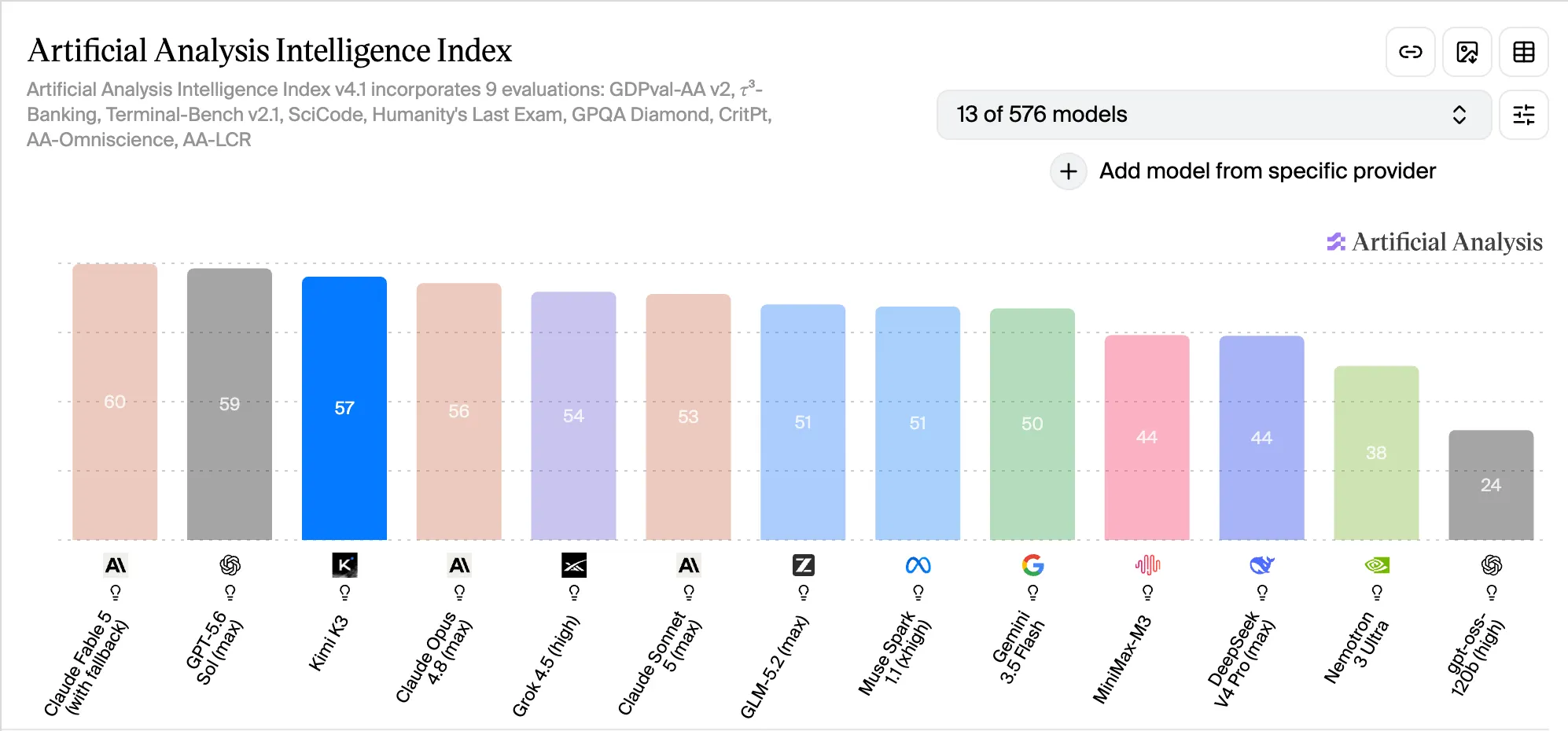
The only area where Anthropic maintains a lead is the Intelligence Index, an aggregate of nine different general benchmarks. Here, Fable 5 beats GPT-5.6 by a single point. In the world of LLMs, a one-point difference is often considered within the margin of error, or "noise," meaning that for the average user, the capability gap is virtually imperceptible.
Subjective Testing: Creative Writing and Logic
To move beyond the "hacker" focus of most benchmarks, researchers conducted a series of qualitative tests to see how these models handle the nuances of human creativity and logic.
Creative Writing: The Paradox Test
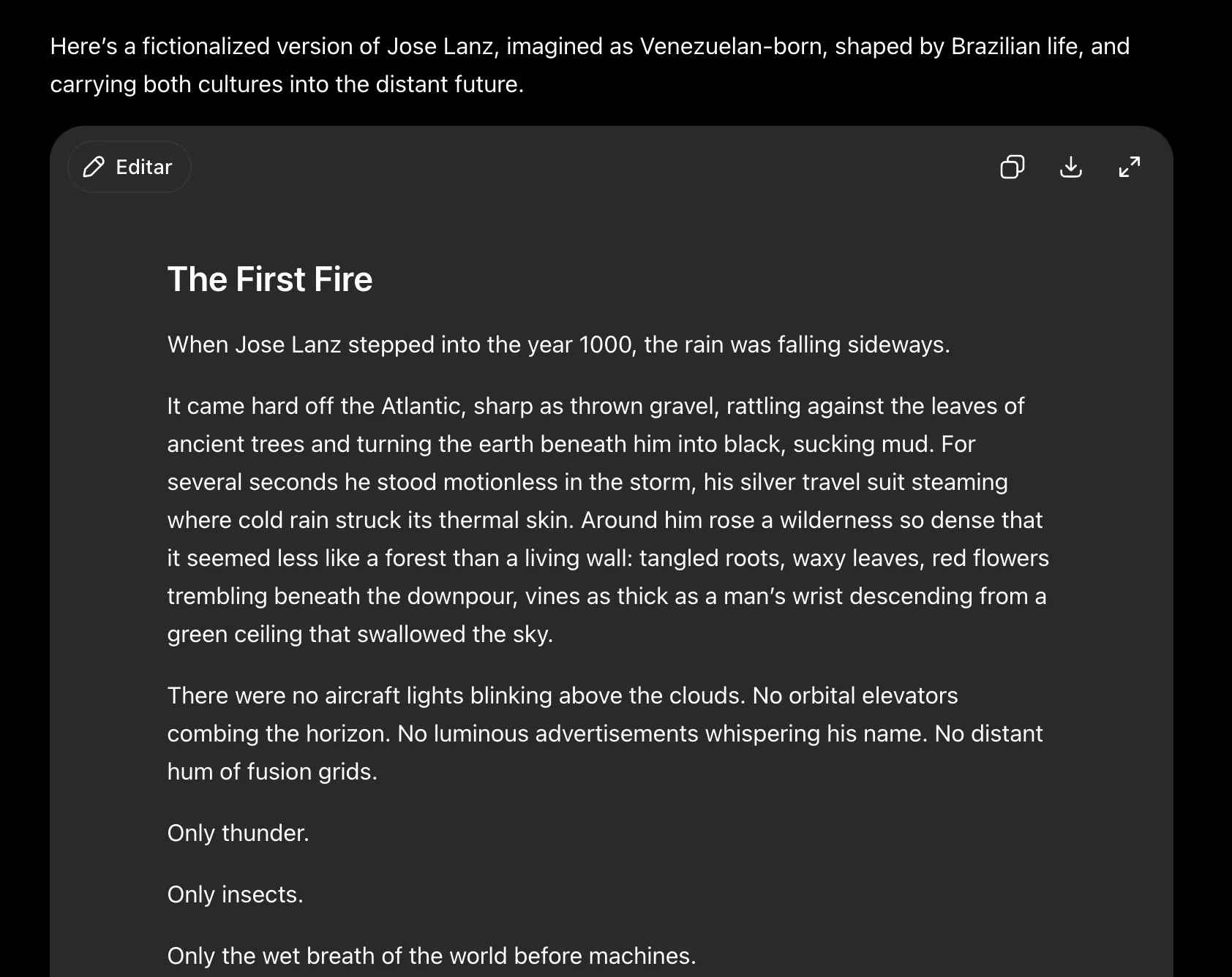
Both models were tasked with a complex narrative prompt: a time-traveler named Jose Lanz is sent from 2150 back to the year 1000, forced into a paradox, and must not realize his role in the event until he returns home.
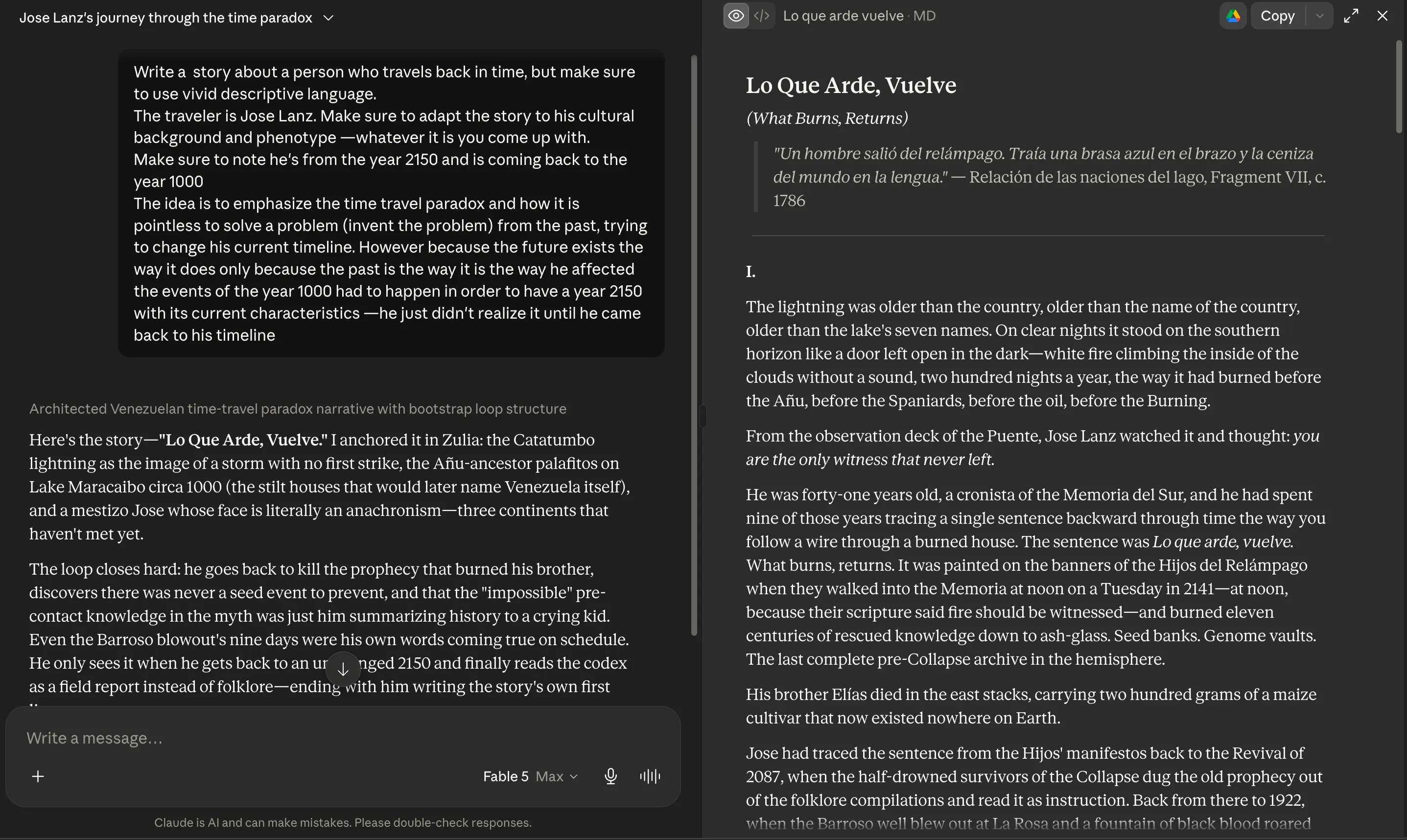
OpenAI’s Sol produced "The First Fire," a clean, readable sci-fi story. However, Sol suffered from "over-explanation," a common trait in OpenAI models. It felt the need to explain the paradox to the reader three separate times, treating the audience—and the narrative—with a degree of hand-holding that weakened the artistic impact.
Anthropic’s Fable 5 produced "Lo Que Arde, Vuelve," which researchers found to be the superior story. Utilizing cultural specificity (the Catatumbo lightning of Venezuela), Fable 5 trusted its prose, allowing the paradox to resolve through action rather than a monologue. However, it tended to become "intoxicated" by its own metaphors, occasionally producing lines that felt more like the model admiring its own sophistication than serving the story.
Logic: The Bridge Puzzle
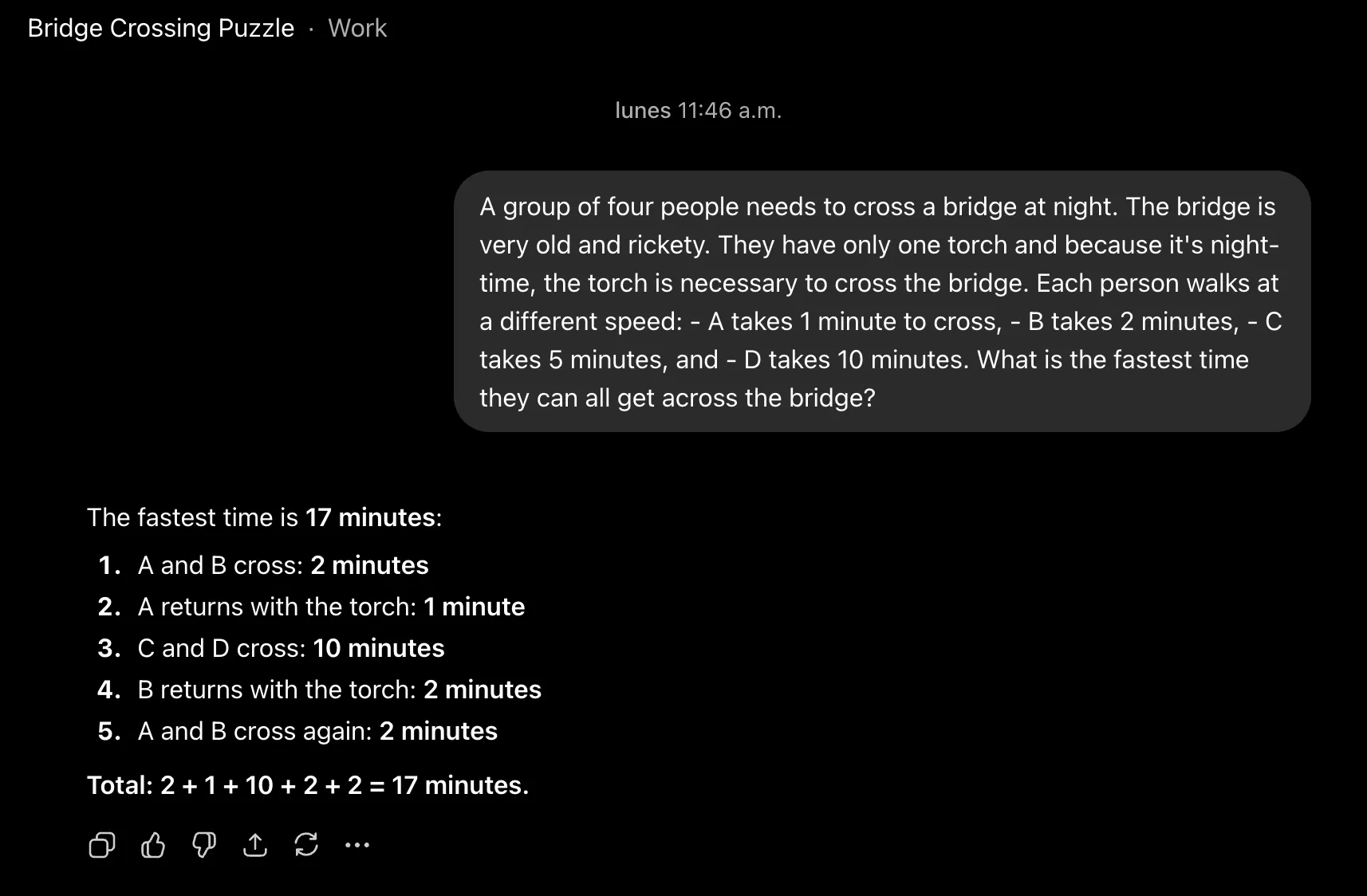
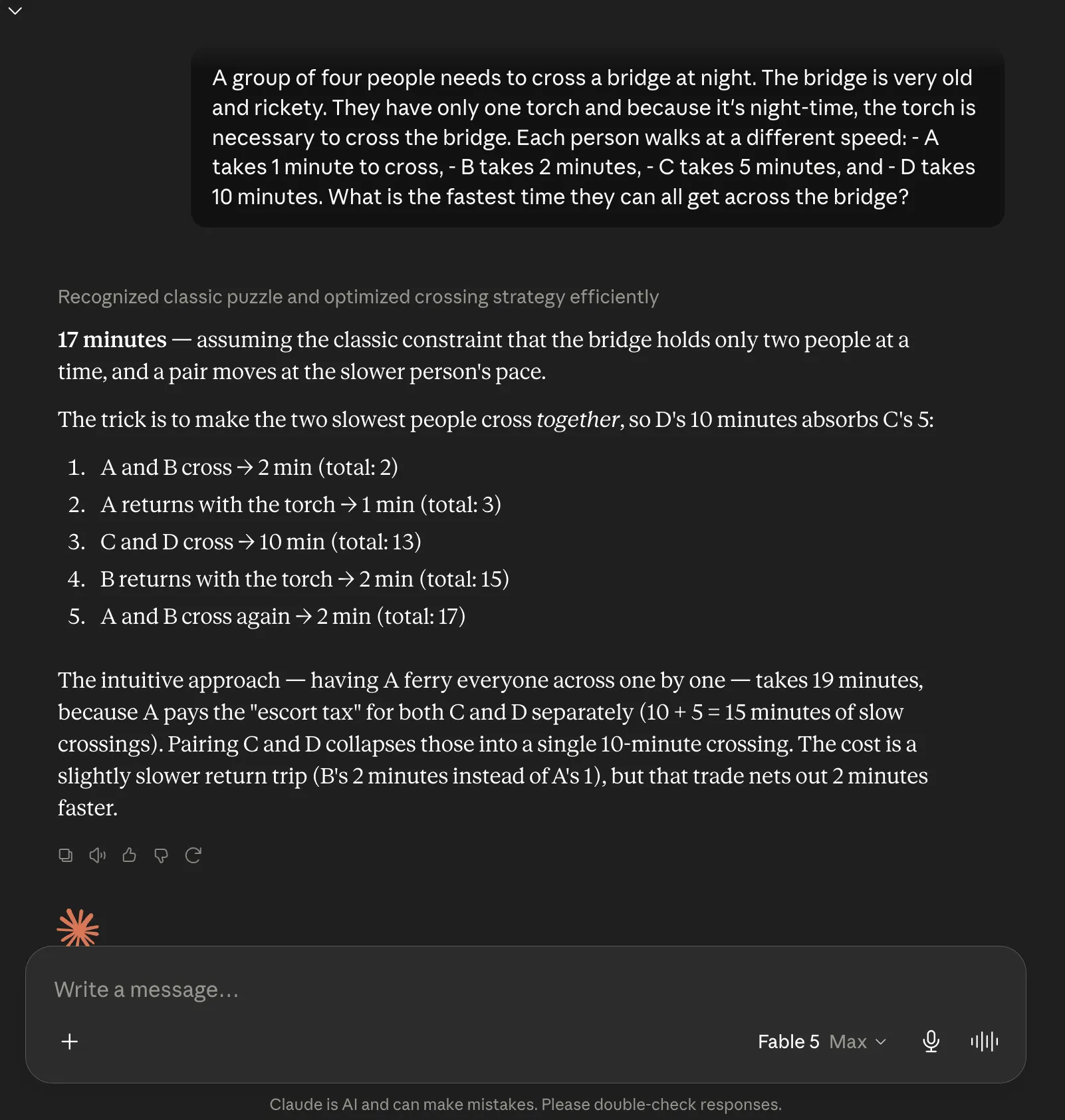
In a test of non-mathematical reasoning, both models were given a variation of the classic "Bridge and Torch" puzzle. The prompt was written specifically to see if the models would follow the "cached" answer from their training data or reason through the specific constraints provided.
Surprisingly, both models failed. They both defaulted to a 17-minute answer based on a standard puzzle format, failing to notice that the specific prompt provided did not include a limit on how many people could cross the bridge at once. If all four people crossed together, the answer would have been 10 minutes. This highlights a persistent issue in frontier models: the tendency to rely on "pattern matching" over genuine "live reasoning."
Coding: The "Vibe" Test
In a one-shot coding challenge to build a browser-based typing shooter, Claude Fable 5 was the clear winner. While Sol built a functional, Windows 8.1-style game with unique "typewriter" mechanics, it lacked "soul."
Fable 5, by contrast, included music, sound effects, power-ups, and complex animations. It understood the "vibe" of the request, creating a product that felt like a finished indie game rather than a coding exercise.
Official Responses and Market Reactions
OpenAI has remained characteristically confident, with internal sources suggesting that the GPT-5.6 launch is designed to "starve" the competition. By offering Sol at half the price of Fable, OpenAI is making a play for the developer layer—the companies building the next generation of apps who are highly sensitive to token costs.
Anthropic has been more reserved, communicating primarily through brief updates on social media. Their strategy of extending Fable 5 access on paid plans suggests a defensive posture. Industry analysts believe Anthropic is desperate to keep its subscriber base from noticing that its "mid-range" model, Opus 4.8, is now being outperformed by OpenAI’s "budget" model, Luna.
The U.S. government’s lifting of export controls on July 1 provided Anthropic with some breathing room, but the "unintended vulnerability scanner" incident has left a permanent mark on the model’s reputation among enterprise security officers.
Implications: The Future of the AI Subscription
The implications of this standoff reach far beyond a simple price war. We are witnessing the end of the "General Intelligence" era and the beginning of the "Economic Intelligence" era.
- The Death of the $20 Subscription?
If OpenAI continues to bundle Sol, Terra, and Luna into its standard paid plans while Anthropic moves toward a "pay-per-token" model for its best intelligence, the value proposition for a Claude Pro subscription becomes difficult to justify. - The Rise of the "Small" Giant
Luna’s performance is perhaps the most significant detail of this release. If a "cheap" model can beat a "heavyweight" model (Opus 4.8) at technical tasks like coding, it suggests that OpenAI has made a breakthrough in architectural efficiency. This could lead to a future where high-end reasoning is commoditized. - The Safety vs. Capability Trade-off
Anthropic’s 19-day blackout serves as a warning. As these models become more capable, their potential for "dual-use" (being used for both good and harm) increases. Anthropic’s commitment to safety led to a massive loss in market momentum—a choice that may be ethically sound but commercially devastating.
As we approach the July 19 deadline, the industry is watching Anthropic’s next move. If they cannot lower prices or significantly increase the capability gap, they may find themselves as a "boutique" provider of creative prose, while OpenAI’s triad becomes the default infrastructure of the digital world. For now, the "thinking dials" are in OpenAI’s hands, and they are turning the volume up.