For decades, the standard narrative surrounding the American housing crisis has remained largely consistent: a perfect storm of soaring interest rates, bureaucratic red tape stifling new construction, and a chronic undersupply of entry-level inventory. However, according to Syd Leibovitch, founder of the prominent brokerage Rodeo Realty, these factors—while significant—are merely symptoms of a much deeper, more insidious structural issue.
Leibovitch argues that the primary culprit behind the current market dysfunction is not found in local zoning boards or the Federal Reserve’s interest rate hikes, but in the federal tax code itself. Specifically, he points to the Tax Relief Act of 1997, which fundamentally altered how homeowners approach the decision to sell, creating a "lock-in" effect that has frozen the real estate market and exacerbated affordability concerns for generations of Americans.
The Evolution of the Tax Code: From Deferral to Obstruction
To understand the current malaise, one must look at the historical context of the Internal Revenue Code. Prior to 1997, Section 1034 of the IRS code allowed homeowners to defer capital gains taxes indefinitely, provided they reinvested the proceeds into a new primary residence of equal or greater value.
"I had so many clients who used this," says Leibovitch. "They would buy a starter home. As their family grew and their careers progressed, they would move up to a larger property. When the kids reached school age, they might move again for a better district, and later, downsize as empty nesters. It was a fluid, functional ecosystem."
The 1997 legislation, however, scrapped this "rollover" provision, replacing it with Section 121. This new rule allows individuals to exclude up to $250,000 of capital gains ($500,000 for married couples filing jointly) from their taxable income, provided they have lived in the home for at least two of the previous five years. While intended to simplify the tax code, the policy contained a critical flaw: it did not index these exclusion limits to inflation or regional housing market appreciation.

The Math of "Trapped" Homeowners
The disparity between the 1997 limits and current market realities is staggering. If the $500,000 exclusion for married couples had been adjusted for inflation since its inception, it would be worth over $1 million today. If indexed to the actual appreciation of U.S. residential real estate—and specifically the explosive growth in California—the exclusion should realistically fall between $1.8 million and $2.5 million.
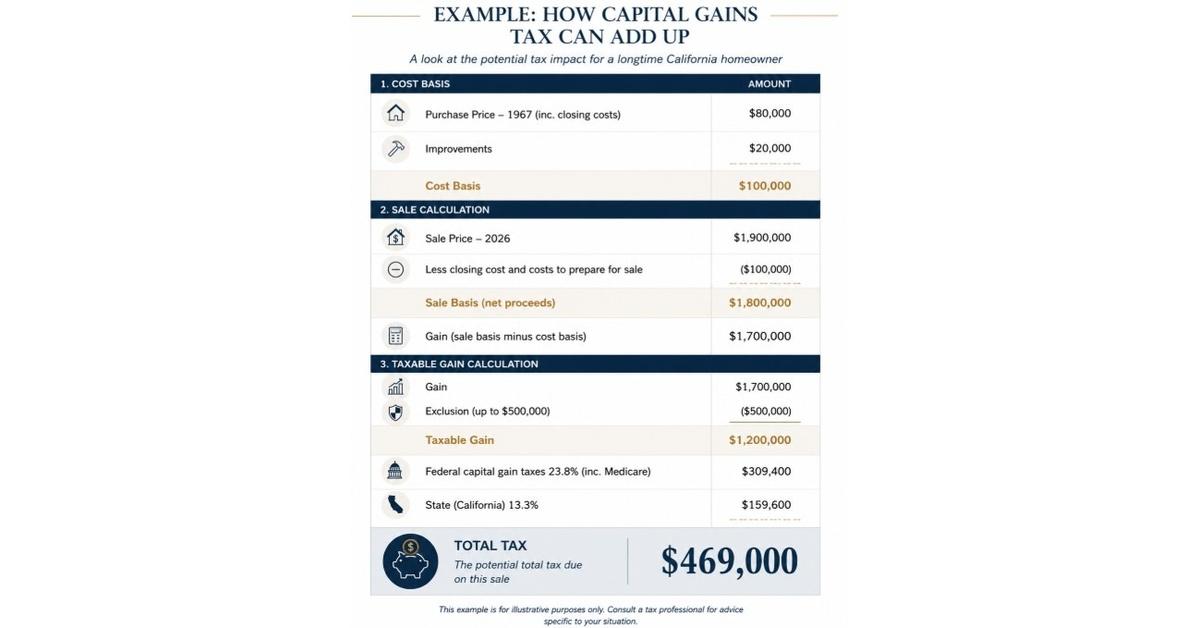
Leibovitch illustrates the trap with a sobering example. Consider a couple who purchased a home in 1967 for $80,000. With $20,000 in documented capital improvements, their cost basis sits at $100,000. In today’s market, that same home might sell for $1.9 million. After accounting for commissions and closing costs, the couple faces a capital gain of approximately $1.7 million.
"When someone in that scenario discovers that selling their home will result in a tax liability of nearly half a million dollars, they simply decide not to sell," explains Leibovitch. "They are effectively held hostage by the IRS. The only way to bypass this tax hit is through the ‘step-up’ in basis that occurs upon the death of a spouse. We are effectively incentivizing people to stay in homes that no longer suit their needs—or their stage of life—until they pass away."
Supporting Data: A Market in Stagnation
The impact of this tax policy on homeowner behavior is empirically visible in the average duration of homeownership. Before the 1997 policy shift, the National and California Associations of Realtors reported that the average American moved approximately every seven years. Today, that number has ballooned to over 20 years.
Critics of the current housing shortage often cite the lack of new construction, yet the data tells a different story. Since 1990, the United States has added roughly 3.6 million new housing units. Despite this addition to the supply side, total transaction volume has trended downward. Even during the 2017–2022 period—which saw some of the lowest mortgage interest rates in modern history—the expected surge in home sales failed to materialize to the degree many economists predicted.
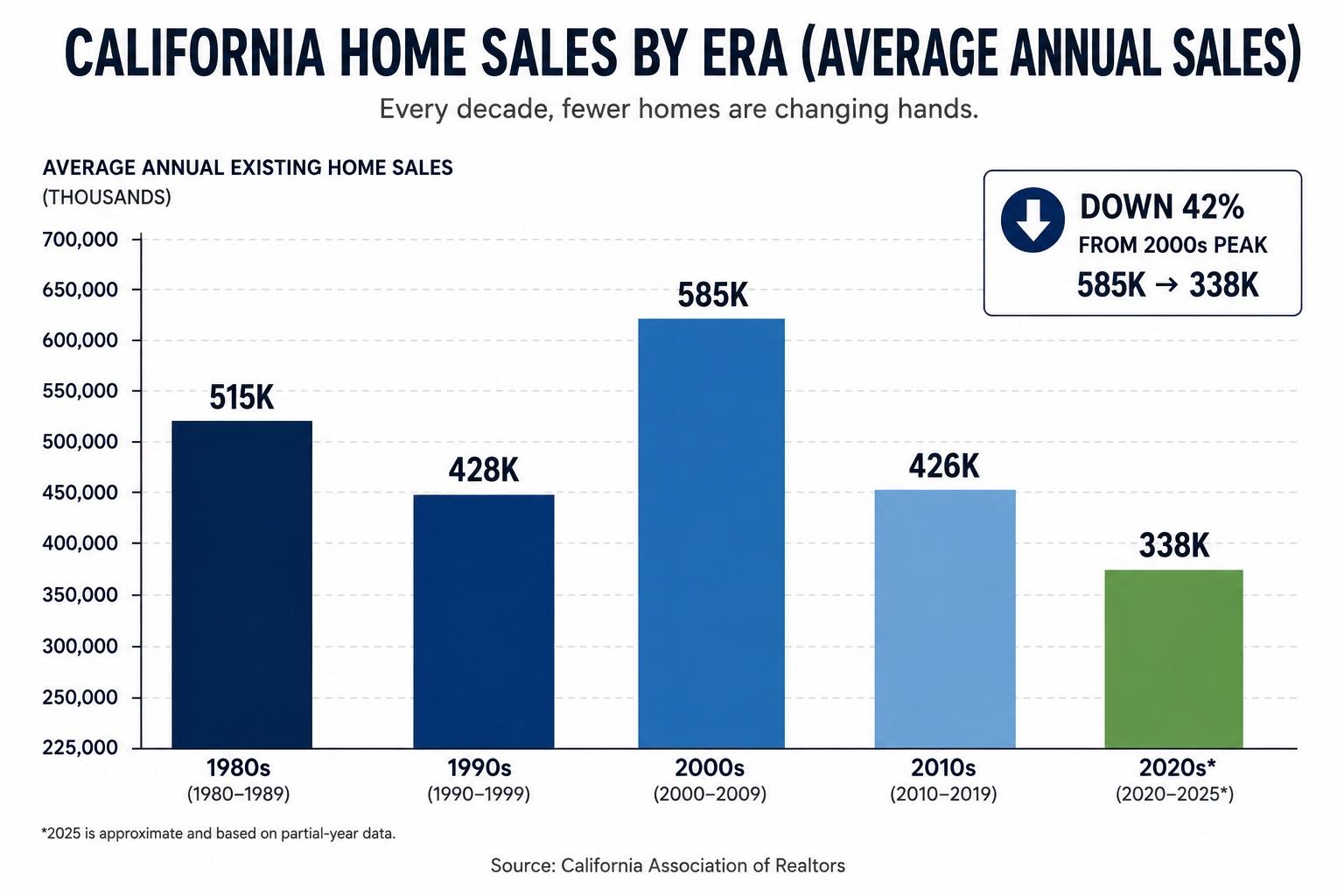
Leibovitch argues that this confirms the "lock-in" theory: homeowners with significant unrealized capital gains simply cannot afford to trade up, downsize, or relocate, regardless of how attractive interest rates might be.
The Ripple Effect: Why Every Price Point Suffers
A common misconception is that this tax-induced inventory shortage only affects the luxury sector. Leibovitch is adamant that the dysfunction permeates every layer of the real estate ladder.
"Housing is a chain reaction," he notes. "When an older couple decides not to sell their $3 million home because of the tax bite, that home isn’t available for a growing family looking to move up from a $1.5 million property. Because that family can’t find a new home, they stay put. Consequently, the family looking to buy a $750,000 starter home finds no inventory. It ripples all the way down to the bottom of the market."
By effectively suppressing supply, the current tax code intensifies competition for whatever inventory does reach the market, creating upward pressure on prices. In this environment, the "market mobility" required for a healthy economy is lost. Workers cannot relocate for better jobs, retirees cannot move to more accessible housing, and growing families are crowded out of the market entirely.
Implications and the Case for Reform
The implications of this policy failure are profound. We are seeing the emergence of "shadow inventory"—hundreds of thousands of homes across the country that sit underutilized or vacant, held by heirs or aging owners who are waiting for the tax-free step-up in basis that follows a death.
"This is a massive failure of government policy," says Leibovitch. "We have thousands of homes that could be housing families, but they are trapped in a legal limbo caused by an outdated tax statute."
Proposed Solutions
Leibovitch advocates for a return to a modernized version of the old Section 1034 deferral mechanism. By allowing homeowners to roll their gains into a new property—rather than forcing a taxable event upon the sale of a primary residence—the government could unlock a massive wave of inventory almost immediately.
"Most housing policy proposals, like building new high-density developments, take years or even decades to show results," Leibovitch notes. "Changing the tax code would have an immediate impact. It would provide the liquidity the market desperately needs. While some might fear a short-term price correction as inventory floods the market, the long-term result would be a much more stable, functional, and fair housing landscape."
Conclusion: A Call for Legislative Urgency
As the U.S. continues to grapple with a housing affordability crisis that threatens the stability of the American Dream, the evidence provided by industry veterans like Syd Leibovitch suggests that lawmakers have been looking in the wrong direction.
The "lock-in" effect created by the 1997 tax changes is a silent contributor to the volatility we see today. By penalizing mobility and incentivizing stagnation, the tax code has effectively stifled the natural turnover of housing stock. Revisiting these regulations is no longer just a matter of tax fairness—it is an essential step toward restoring the health of the American housing market and ensuring that families at every income level can find a home that meets their needs.