As global markets remain perched on the edge of anticipation, investors are counting down the days to a potential signing of a "phase one" trade deal between the United States and China. Yet, beneath the veneer of optimism and the promise of de-escalation, a growing chorus of prominent economists and geopolitical analysts warn that the agreement may be little more than a superficial bandage on a gaping structural wound.
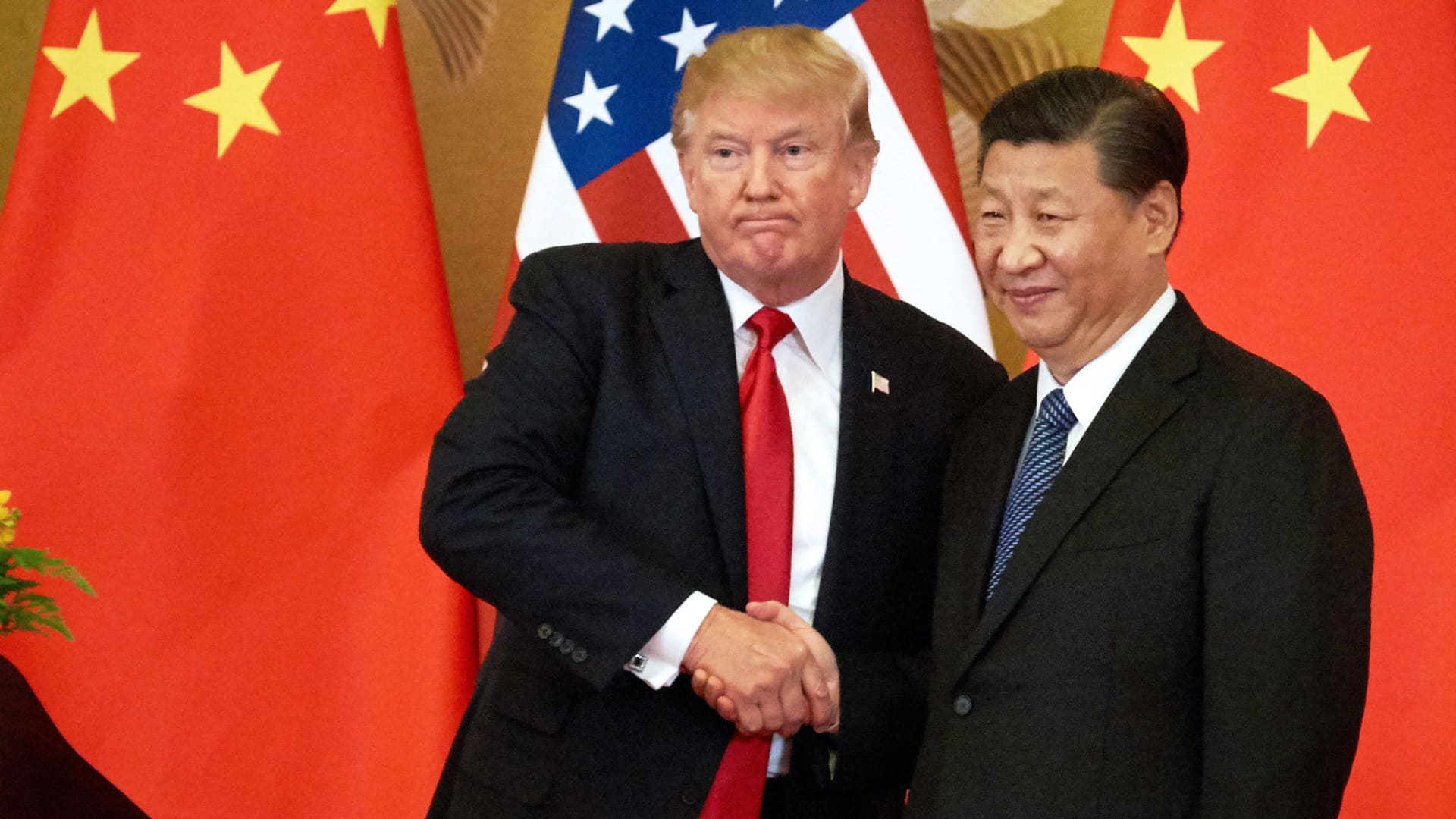
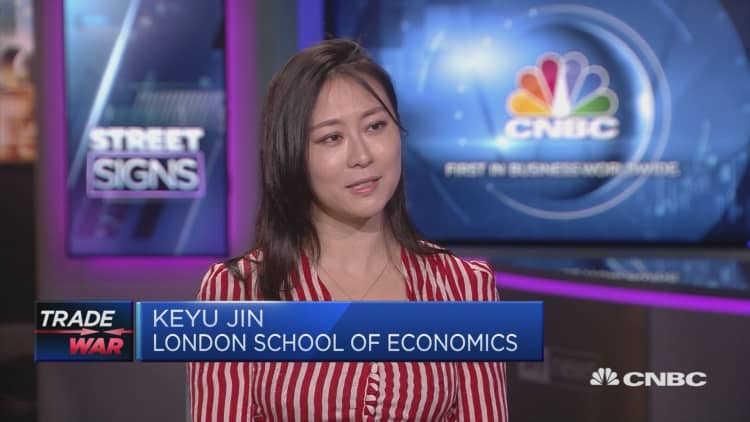
Speaking to CNBC, Keyu Jin, an associate professor of economics at the London School of Economics, offered a sobering assessment of the impending accord. Describing it as a "face deal," Jin suggested that the agreement is designed primarily to provide both President Donald Trump and President Xi Jinping with a narrative of progress, while effectively kicking the most intractable, non-negotiable issues down the road.
The Anatomy of the "Face Deal"
The trade conflict, which has roiled global supply chains and injected volatility into equity markets for over a year, has reached a point where both administrations are under immense pressure to show results. For President Trump, the deal serves as a "big gift" to satisfy jittery stock markets that react viscerally to every tariff announcement. For Beijing, it is an opportunity to stabilize an economy facing domestic headwinds.
However, the consensus among experts is that the "phase one" package consists primarily of the "low-hanging fruit"—the resolvable, negotiable items that have already been vetted. The truly contentious issues—such as state subsidies, forced technology transfers, and the deep-seated ideological divide regarding the role of the state in the economy—remain untouched.
"Unless old tariffs can be rolled back for China, it can’t really be seen as a victory for them, or much for the U.S., because the more intractable problems are still there," Jin noted.
Chronology of a Protracted Conflict
To understand why "phase one" is being viewed with such skepticism, one must look at the trajectory of the trade war:
- 2018: The Escalation Phase. The conflict began in earnest with the imposition of broad tariffs by the Trump administration, targeting Chinese goods under Section 301 of the Trade Act of 1974. China responded with retaliatory measures, setting off a cycle of tit-for-tat escalation.
- Early 2019: The Search for Common Ground. Negotiations moved behind closed doors. Both sides expressed optimism, but structural disagreements regarding enforcement mechanisms stalled progress.
- October 2019: The "Substantial" Breakthrough. Following a high-level meeting in Washington, President Trump announced that the two nations had reached a "very substantial phase one deal." This announcement served as a primary catalyst for the recent market rally.
- November 2019: The "Final Throes." As of late November, President Trump characterized negotiations as being in the "final throes," while China’s Ministry of Commerce confirmed that both sides were actively discussing the resolution of "core issues."
Despite this timeline, the distance between a signed document and a fundamental shift in the U.S.-China economic relationship remains vast.
The Enforcement Paradox
A critical point of contention in any trade agreement is the mechanism for enforcement. Historically, skepticism has surrounded China’s willingness—and ability—to implement promised reforms.
Keyu Jin highlights a distinction that many Western observers often miss: the difference between legal codification and local enforcement. "Lots of things are written in the law; the legal system is quite comprehensive, the patent protection mechanism is there. It’s really about enforcement," she explained.
The challenge lies in the decentralized nature of Chinese governance. Central directives from Beijing do not always permeate down to the provincial and local levels, where private firms and local governments often operate with a degree of autonomy that can frustrate international compliance standards. While the Chinese government has taken substantive steps toward better intellectual property (IP) protection, the reality is that such changes are often consistent with China’s own long-term innovation goals rather than being concessions granted solely to the United States.
Structural Realities: A False Dichotomy
Perhaps the most significant finding in recent analysis is the rejection of the idea that China will drastically overhaul its economic model. Many U.S. policymakers hope that a deal will force China to reduce state influence over the economy and decouple the state from private industry.
Jin argues that this is fundamentally misguided. "If we’re talking about wanting the Chinese to change their development model, reducing the state influence, I think that’s more of a no-go area," she stated. Furthermore, she contends that the Western tendency to separate the state from the private sector is a "false dichotomy" when applied to China. In the Chinese model, state-owned enterprises and private entities are increasingly collaborating, merging, and operating in tandem to advance national technological sovereignty. This is a core component of China’s grand strategy, and it is highly unlikely that any trade deal will force a departure from this trajectory.
Expert Perspectives: From "Hollow" to "Positive"
The academic and financial communities are deeply divided on the implications of the forthcoming deal.
Stephen Roach, a senior lecturer at Yale University’s Jackson Institute, has been one of the most vocal critics, labeling the deal as "hollow," "flawed," and "politically expedient." According to Roach, the deal fails to address the structural issues that sparked the conflict, essentially serving as a temporary political patch that provides no long-term resolution.
Steve Okun, a senior advisor at McLarty Associates, adds a layer of political realism to the discourse, noting that both Xi and Trump are constrained by internal politics. For Xi, the challenge is maintaining his standing within the Chinese Communist Party while navigating an economic slowdown. For Trump, the deal is a balancing act between his base’s demand for a "tough on China" stance and the economic necessity of avoiding a prolonged recessionary environment.
Conversely, some market participants remain optimistic. King Lip of Baker Avenue Asset Management has argued that even a minor, symbolic agreement could act as a significant positive catalyst. From this perspective, the "economic nirvana" that former Treasury Secretary Larry Summers famously dismissed is not the goal; rather, the goal is simply to end the state of perpetual escalation.
Broader Implications for the Global Economy
If the "phase one" deal is indeed just a "pause" in the trade war—a sentiment echoed by Lu Yu of Allianz Global Investors—then the global economy may be in for a long period of uncertainty.
- Supply Chain Reconfiguration: The uncertainty surrounding the future of trade has already forced multinational corporations to begin diversifying their supply chains. This shift is unlikely to reverse, regardless of a phase one agreement.
- Technological Decoupling: The focus on IP and technology, while central to the trade negotiations, is part of a larger, ongoing process of technological decoupling between the world’s two largest economies. This trend is likely to persist as both nations prioritize self-reliance in semiconductors, AI, and 5G.
- Market Sentiment: Investors should prepare for continued volatility. As long as the "intractable" issues remain on the table for future phases, every minor dip in relations or a perceived breach of the agreement could trigger sharp market movements.
Conclusion
The "phase one" trade deal between the United States and China represents a delicate diplomatic compromise. It is a necessary step to stop the bleeding in the short term, providing a much-needed cooling-off period for both Washington and Beijing.
However, as economists like Keyu Jin have meticulously pointed out, it is not a cure. By focusing on the "resolvable" issues and leaving the structural foundations of the trade conflict largely unaddressed, the deal is more of a tactical maneuver than a strategic realignment. As both nations continue to navigate their respective domestic political pressures, the world remains in a state of suspended animation—waiting to see whether this "phase one" is the beginning of a true resolution or merely the eye of a much larger, more complex economic storm.